

E-commerce+40%conversion lift
MouthShieldHeatmap analysis and six targeted changes took MouthShield from 4.69% to 6.6% conversion in 17 days.
Read case studyHere is what that is costing you.
The math on inaction, why dev bottlenecks are the real problem, and what you can do about it today.
Grona Team
Published 4 Feb 2026

Your Google Ads are optimized weekly. Your email sequences are updated monthly. Your social content is refreshed daily. Your website? It is the same page it was six months ago.
The website gets the most traffic and the least attention. Not because you do not care. Because changing it requires a developer, a sprint, and three to six weeks of waiting.
The irony: you spend thousands driving traffic to a page you have not touched in months. Every ad click, every email open, every social referral lands on a page that has not been improved since it was first built.
You are spending money to drive traffic to a page you have not improved in six months. Let us talk about what that costs.
Here is a simple calculation. Replace the numbers with your own and the math still works.
Most sites have 5 to 10 high-impact changes waiting. Multiply accordingly.
This is not theoretical. Industry benchmarks show consistent website optimization produces an average 10-25% lift. One change. 30 extra conversions. $1,500 a month. Over six months: $9,000 you did not collect.
And that is from a single test on a single page.
Replace 10,000 with your actual monthly visitors. Replace $50 with your average order value. The math still works. The point is not precision. The point is that doing nothing has a real, calculable cost.
Up to 93%
of developers report frustration working on marketing websites
Underscore 2026
$3K-$10K/mo
typical agency retainer, before a single change goes live
Industry range
7+ weeks
average time from marketing request to live website change
Traditional dev workflow
Plug in your own numbers:
See what a conversion lift could mean for your business.
Additional monthly revenue
$4,320
$51,840 per year
Current revenue
$24,000/mo
Projected revenue
$28,320/mo
Actual results vary based on traffic quality and site performance.
This is not because marketers are lazy. The conditions are the problem.
Dev teams carry a 4 to 8 week backlog of feature work. Marketing website changes sit at the bottom of the priority list. A headline change competes with product features for engineering time. The headline loses every time.
Most platforms make it hard to test variations without code. "Change the headline" becomes "file a ticket, wait for a sprint, hope it does not get bumped." By the time the change goes live, the campaign it was designed for ended weeks ago.
Agencies cost $3K to $10K per month and still need dev access to implement changes. That is $36K to $120K per year before a single change goes live. For most teams, this is not a budget line that gets approved.
Tools like VWO start at $199/mo. Optimizely runs up to $36K/yr. Both require technical setup and ongoing developer support to maintain. You pay for the tool and still need to pay for someone to run it.
The result: the people closest to the customer cannot touch the thing customers see first.
Up to 93% of developers report frustration working on marketing websites (Underscore 2026 data). Both sides lose. Devs do not want to swap button colors. Marketers do not want to wait six weeks. Both sides are right.
This is a structural problem, not a people problem. The tools and workflows were not designed for marketing speed.
The cost of not improving is not linear. It compounds. Every month without a change is a month your competitors learn something you do not.
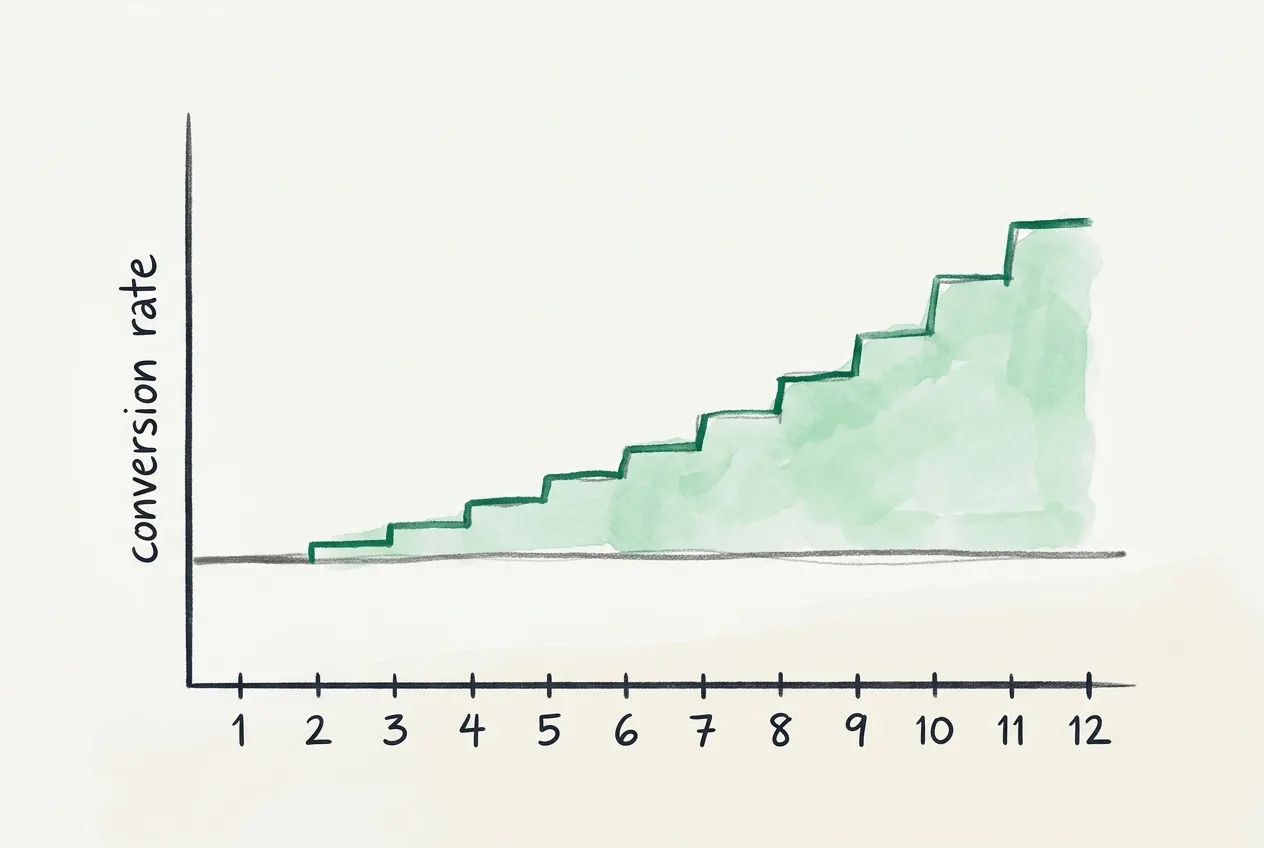
Website optimization compounds like interest. Each improvement teaches you something. A winning change lifts your baseline. The next change builds on that higher baseline.
If you make 1 improvement per month and each produces a 5-15% incremental lift, the compounding effect over 12 months is significant.
Example: start at a 2% conversion rate. A 10% lift brings you to 2.2%. Another 10% lift on 2.2% brings you to 2.42%. After 6 successful changes over 12 months, you are at approximately 2.6% to 2.8%. That is a 30-40% total lift from the original 2%.
But if you change nothing, you compound at zero. Your conversion rate stays flat. Meanwhile, competitors who iterate are pulling ahead every month.
Optimization compounds like interest. Zero changes compound at zero.
After 12 months, the gap between iterating and standing still is not small. It is 30-40% of your baseline conversion rate. Every week you do not improve is a week your competitors learn something you do not.
Tools like Grona let you run your first test in an afternoon instead of waiting weeks for dev availability.
You do not need a bigger dev team. You do not need an agency. You need a way to make changes and test them without going through the dev ticket queue.
Three things to look for in a solution:
You should be able to create and launch a test without writing code or filing a ticket. Describe what you want to change. See a preview. Go live.
Do not guess what to test. Look at what competitors are doing first. What do their hero sections say? How do they structure CTAs? What trust signals do they use? Research first, then test.
You should not need to migrate platforms, redesign anything, or install a complex SDK. One script snippet. That is it.
This is exactly what Grona was built for: paste your URL, research through chat, describe changes, and launch a test. No code, no tickets.
You stay in control. You decide what to research, what to change, and when to go live. The AI is a tool you direct, not an agent that acts on its own.
Research first. Test second. Guess never.
Start with your highest-traffic page. One test. One variable. One clear result. Then build from there.
The math is simple. Every month without a test is revenue left on the table.
If your site gets 10,000 visitors a month, a single test could recover $1,500/month. Six months of inaction: $9,000 from one test you did not run.
You do not need permission from your dev team. You need a URL and a hypothesis.
Proof it works
Real businesses. Real metrics. All tested with Grona.
Heatmap analysis and six targeted changes took MouthShield from 4.69% to 6.6% conversion in 17 days.
Read case study
Swapped ingredient-first copy for outcome-focused headlines. Results in 12 days.
Read case study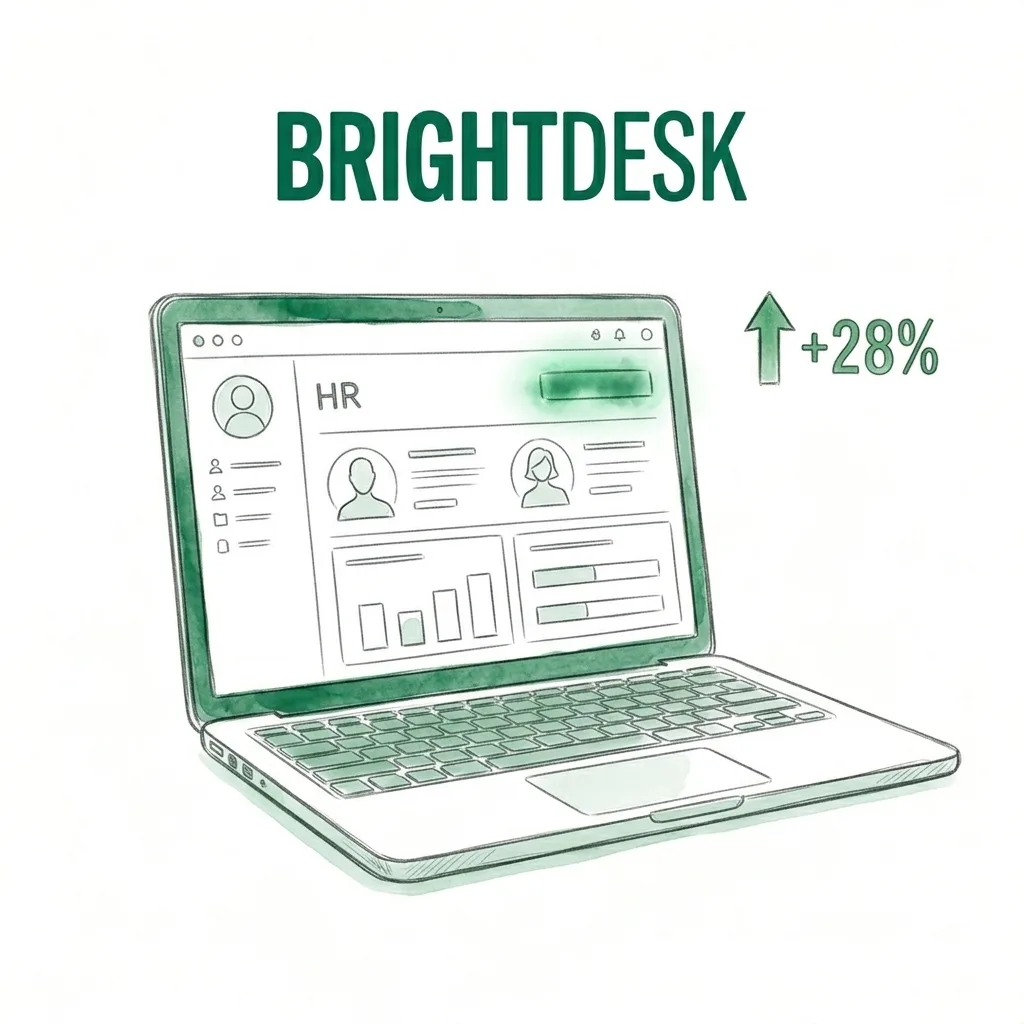
Changed 'Get Started' to 'Talk to an HR Expert' and cut form fields from 9 to 5. 14 days.
Read case study
Moved 2,300+ buried reviews above the fold. Results in 10 days.
Read case study
Simplified checkout from 11 fields to 7. Added express pay. 18 days.
Read case studyWeekly insights on website editing, optimization, and growing your conversions.